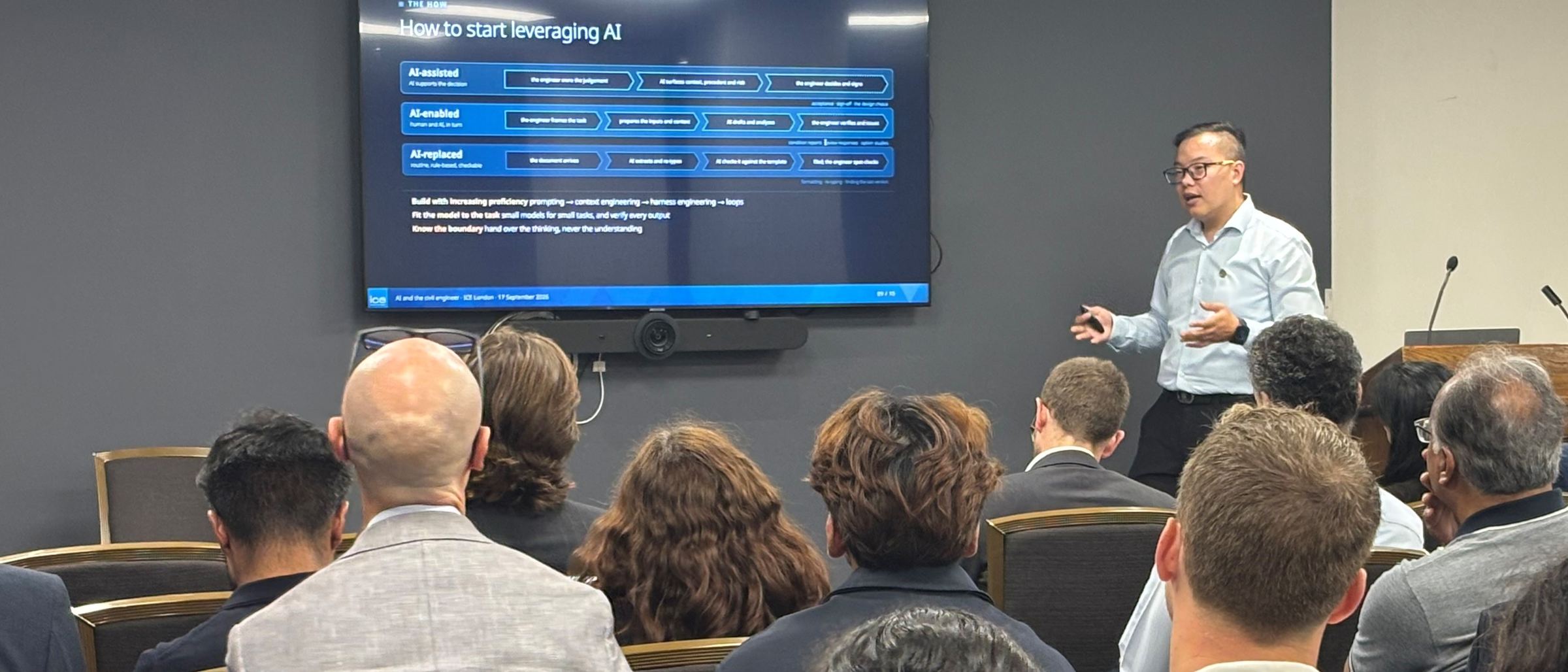

What happened.
On Thursday 17 September, 46 people came to the Rennie Room at One Great George Street for AI and the civil engineer. The evening was convened by the ICE London AI Working Group and open to members and anyone working in infrastructure.
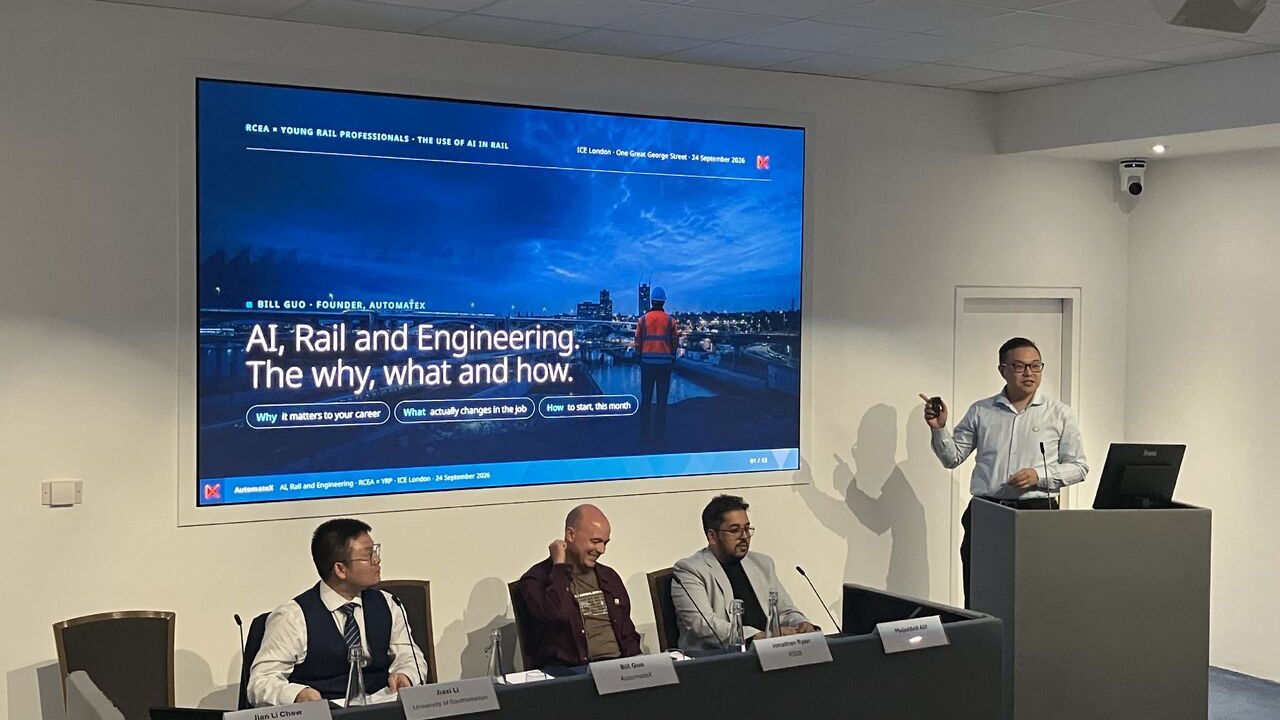
Bill Guo, Vice Chair of ICE London, opened with the context. A century ago the electric motor was ready long before factories changed, and the boom came only once they were rebuilt around it. Then the question for the evening: how is our role in infrastructure delivery being reshaped in the era of AI?
Anthony Dewar of Network Rail spoke on design, build, operate and renew, and how AI touches each stage. Lucy Gardner of Arup set out how AI is shaping Arup’s global rail skills strategy. Amira Damji of the ICE London AI Working Group joined them on the panel, which Bill chaired, and brought the view from smaller firms. Dr Frederick Levy FICE gave the vote of thanks.
Four threads ran through the discussion. Which skills we need to keep hold of. How to put AI to work on a real job. What clients will care about. And the ICE Code of Professional Conduct, which already points at the answer: the accountability stays with the engineer, whatever the tool.
A good number stayed talking well after the close.
Our value is the vault. AI could be the key that opens more of it.
Bill Guo FICE CEng MEng, Vice Chair, ICE London
At a glance.
On the night
The evening in pictures.
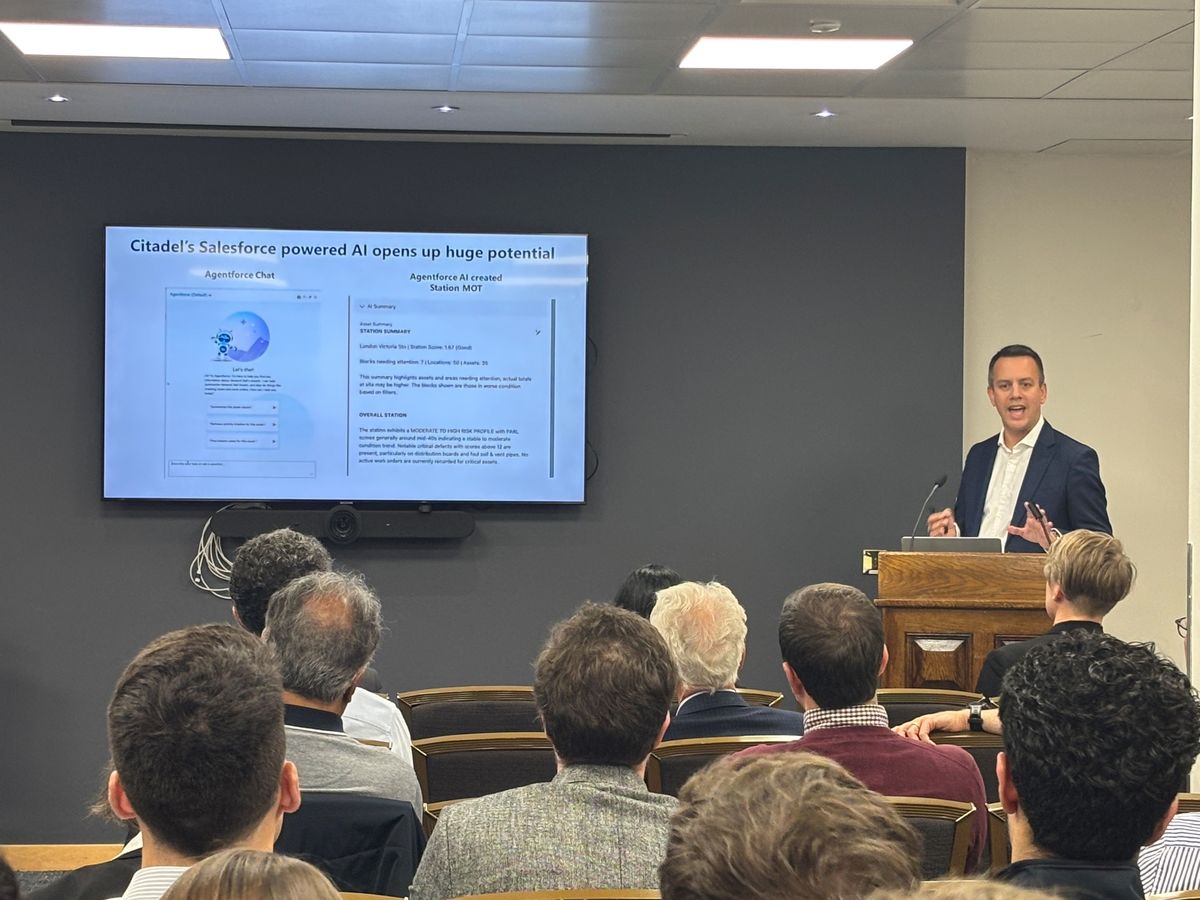
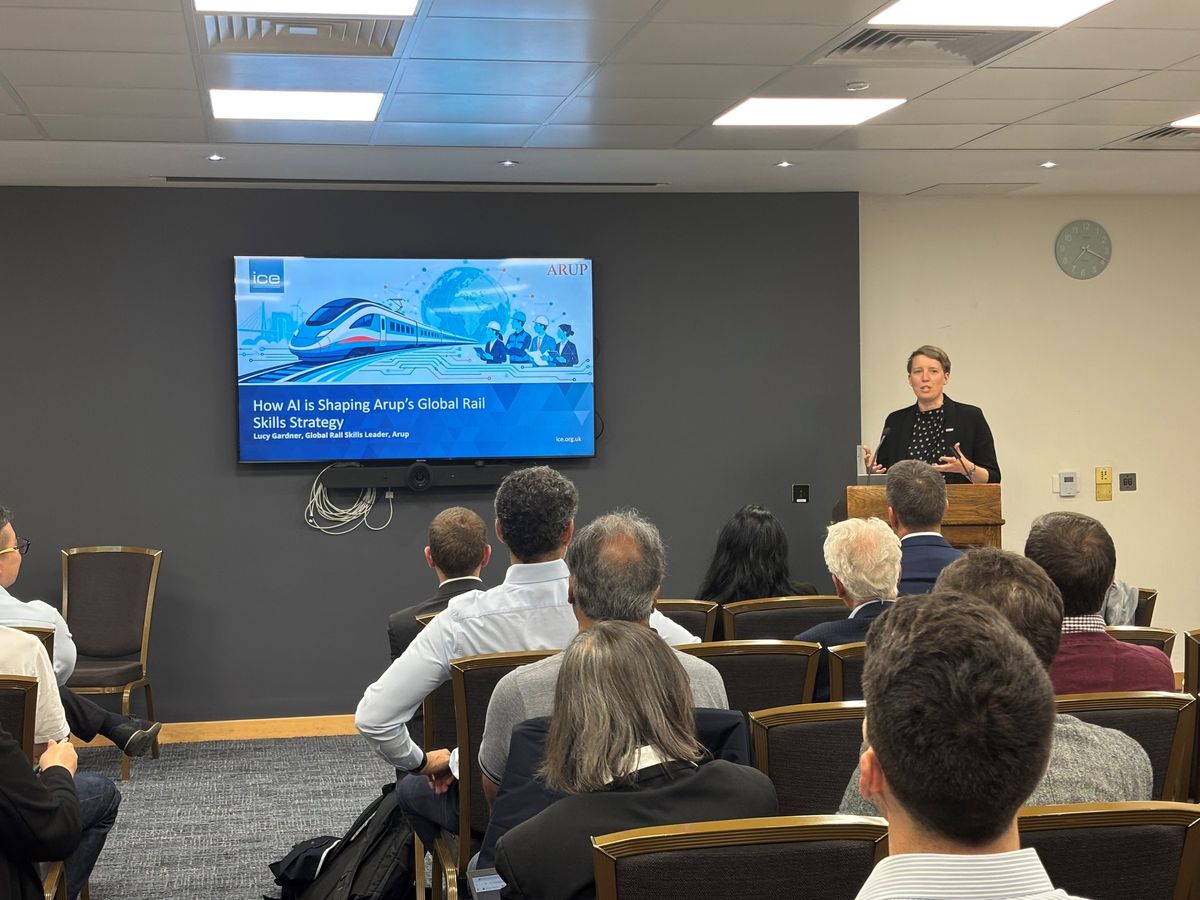
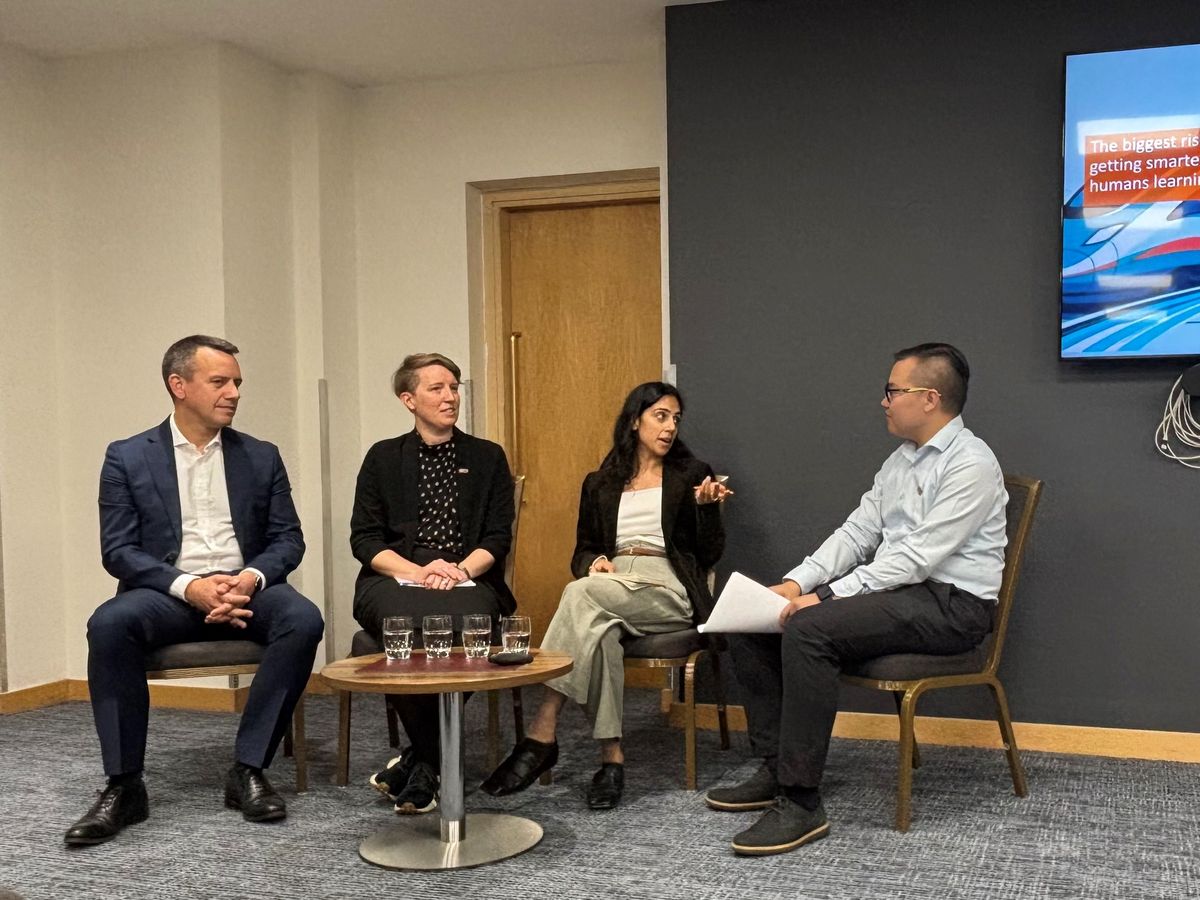
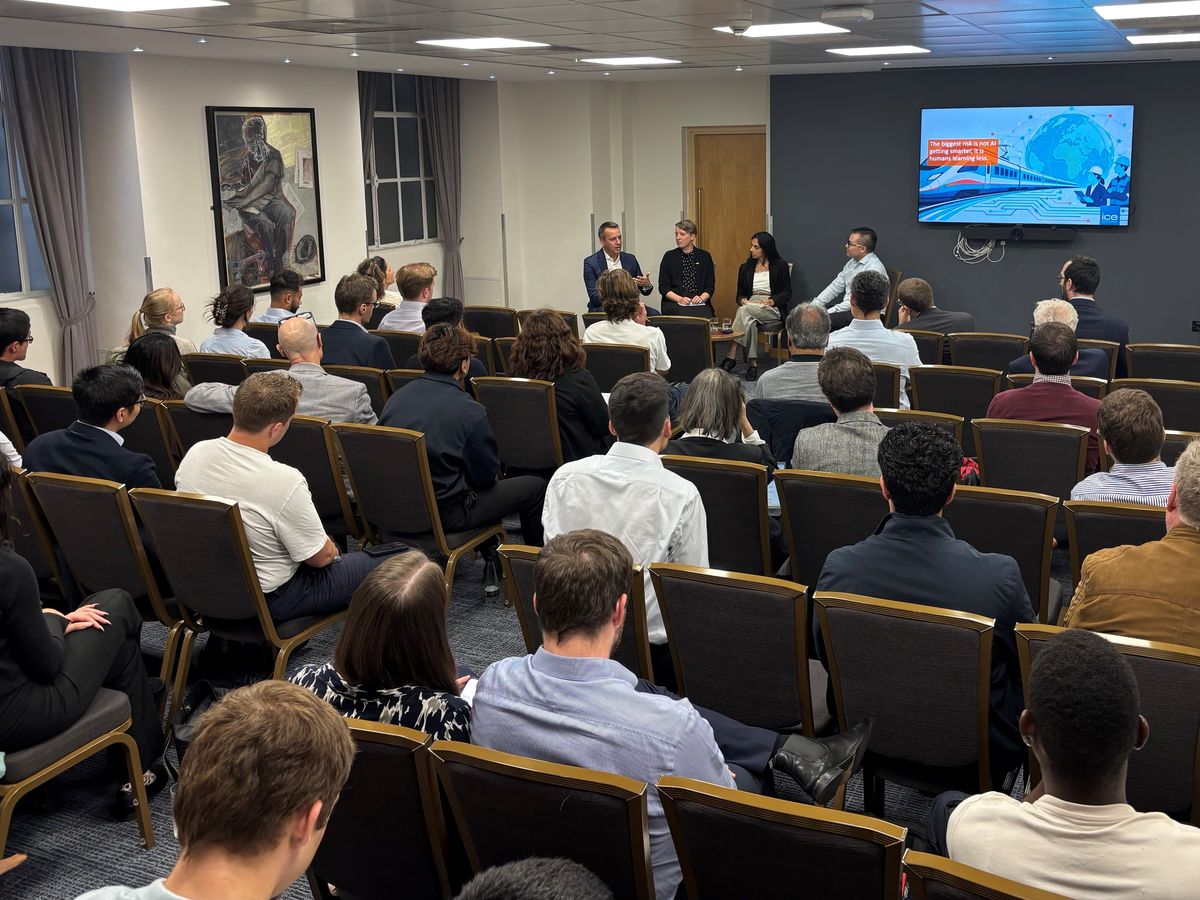
Photographs: Institution of Civil Engineers.
Welcome and context setting.
The 14 slides Bill opened the evening with, including the introductions to both speakers. Use the arrows or the thumbnails, open them full screen, or take the PDF.

Take it further.
The practical version, every fortnight.
A short newsletter every two weeks on AI in rail: what worked, what did not, and one thing to try. Subscribers also get early access to Scribtive® OS when it opens. Free, and easy to leave.
Consent, UK GDPR Article 6(1)(a). See the privacy notice. The same list as the Scribtive waitlist.